Technology for the people who report
We work with journalists, newsrooms and advocacy groups on the technical side of their work: finding the stories inside a flood of information, tracking an issue over months, and turning reporting into data they can analyse and publish.
Reporting teams already sit on valuable data. Every article on an issue is a data point: where it happened, who was involved, what the police and courts did next. Seen together, those reports show patterns that no single story can.
Seeing them together usually means someone reading through dozens of data sources every day and copying details into a spreadsheet by hand. The work is slow, hard to keep up, and on sensitive subjects it is hard on the people doing it.
We focus on the hardest beats: gender-based violence, exploitative content and child sexual abuse material (CSAM). They are the subjects where the volume is heaviest, the material is most distressing, and keeping data off third-party servers matters most.
We build the tools that do the reading, sorting and structuring, so reporters can spend their time on judgement and on the story.
Start from a product, build something of your own, or bring us the problem
Products
Ready-to-use tools for common reporting work, such as monitoring data sources, classifying content and exporting structured records. You connect your own data sources and set them up for your subject.
Custom turnkey solutions
A complete system shaped around your newsroom's process, from where the data comes in to what gets published. We design, build and hand it over, ready to run.
Tech consulting
Advice on data pipelines, analysis, tooling and responsible use of AI in reporting, for teams that want to build in house or need a second opinion.
Models that run on your own machine
Nothing leaves the machine
Classification and extraction models run locally, next to the data. Material on gender-based violence, exploitation and CSAM is never sent to a cloud service, and there is no API key to manage.
Useful from day one
Models ship already trained, so a new team gets useful results before labelling anything.
Learns your beat
As reporters correct the model, it learns from those corrections. Data sources, fields and thresholds are all configurable, so the same base fits different subjects and different teams.
A person decides
The models draft; people approve. Nothing is published or exported until someone has reviewed it, and anything the source does not state is left as unknown rather than guessed.
An audit trail
Every suggestion records the model and version that produced it, so a team can always tell what the software proposed and what a person changed.
Tracking gender-based violence in the news
One product we are building on this base: a tool that gathers content from the data sources a team configures, finds reporting on gender-based violence, and turns it into reviewed records ready for analysis and publishing. It could be one part of a larger solution in your own context.
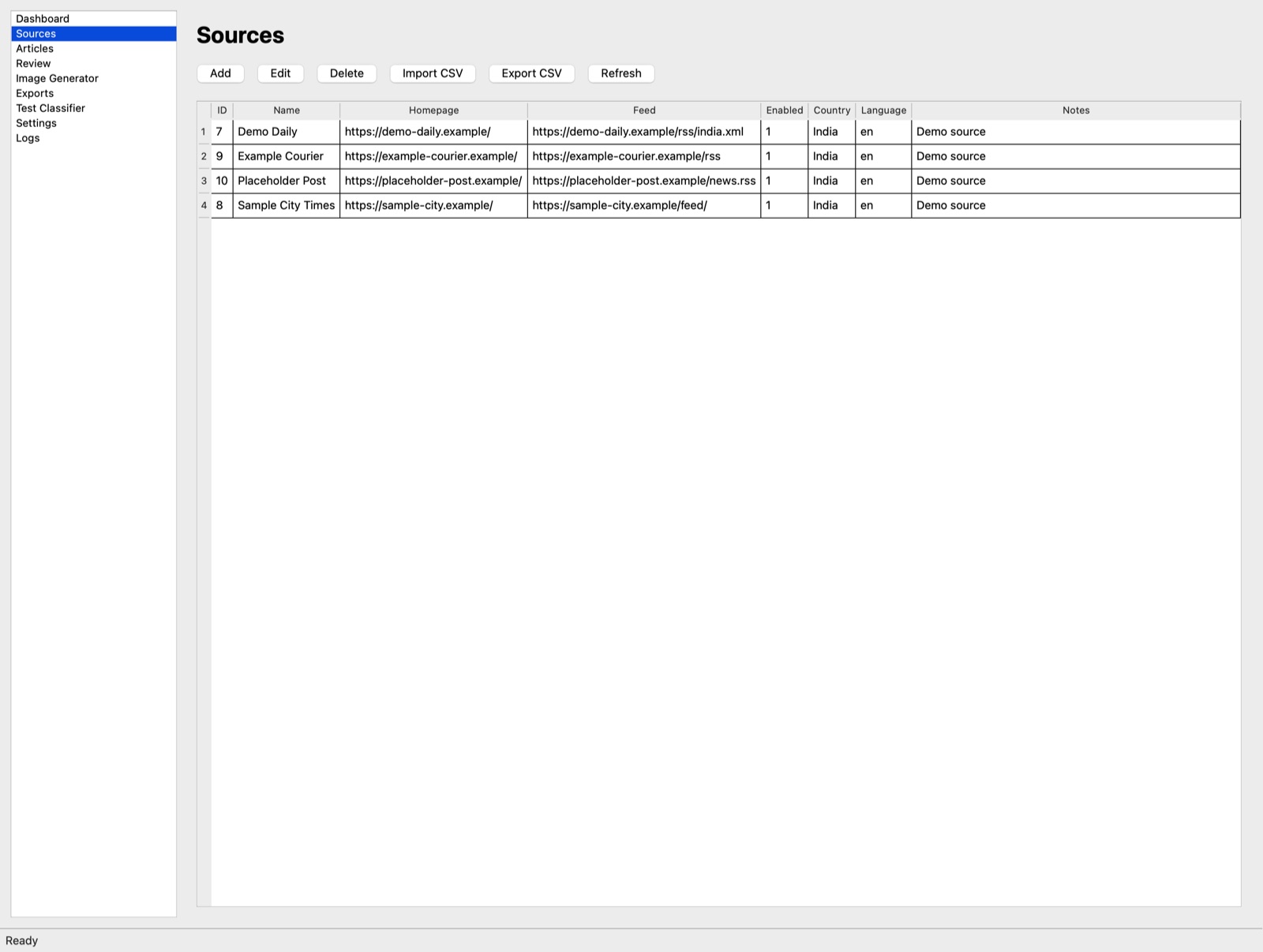
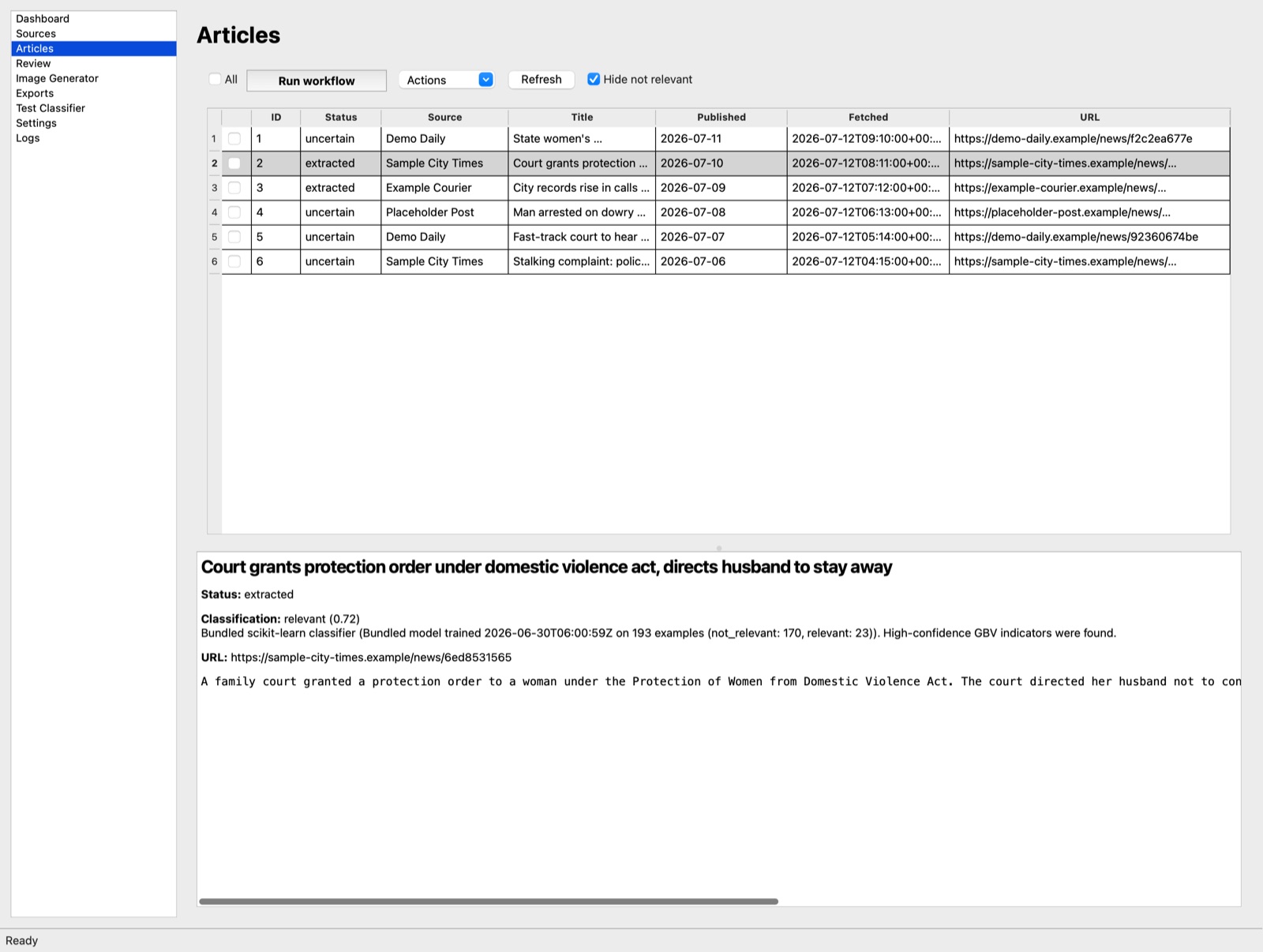
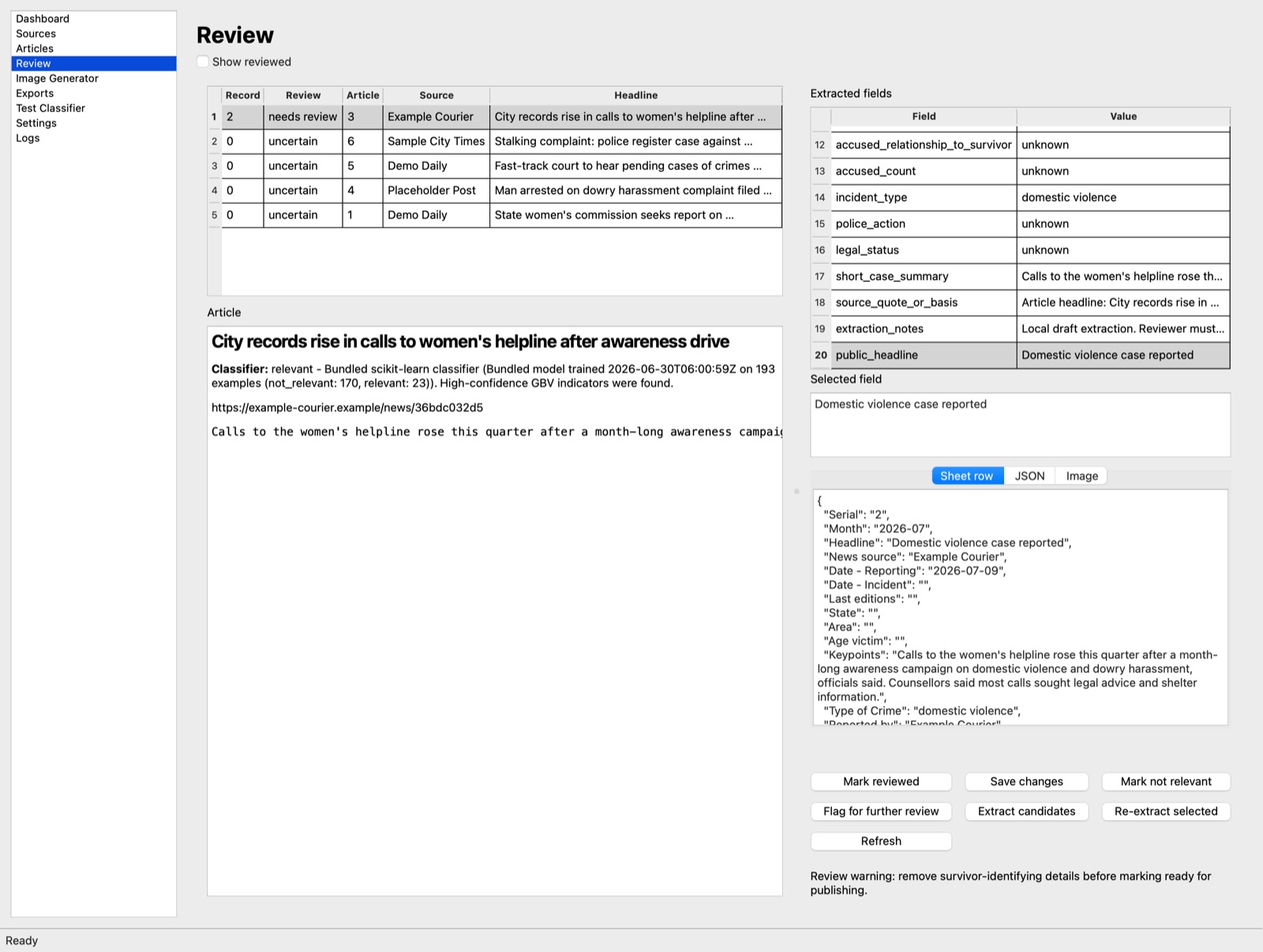
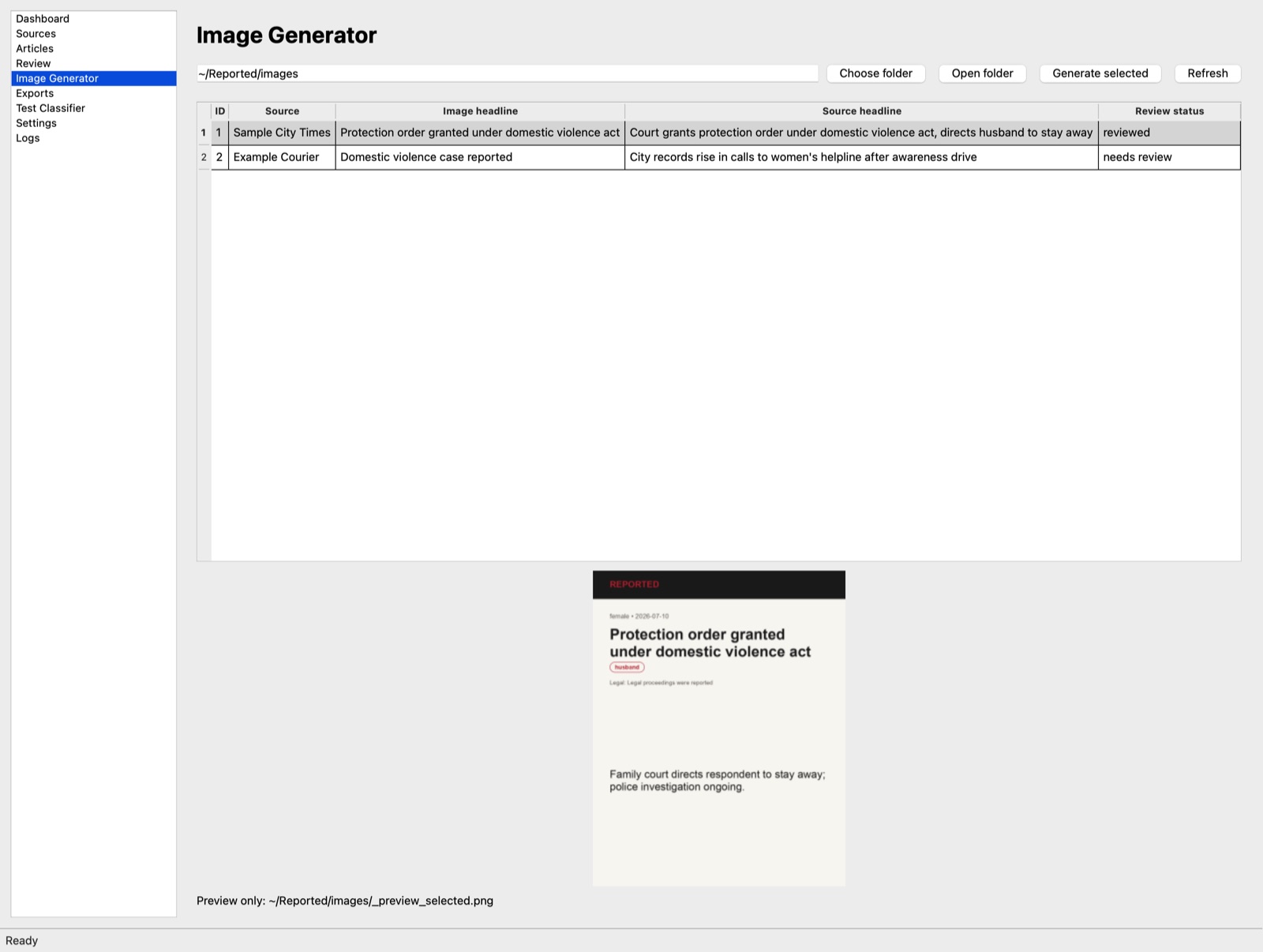
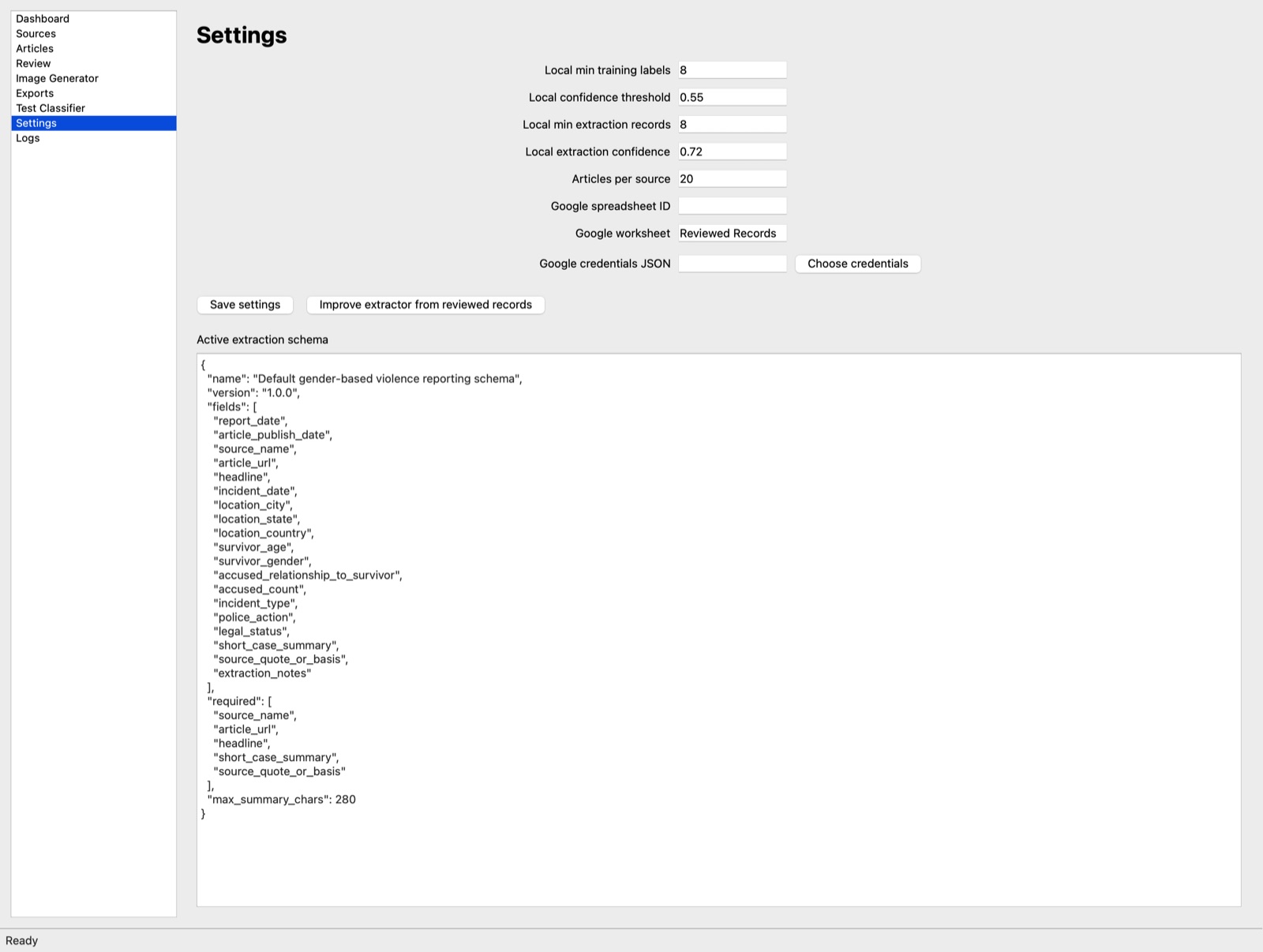
All data sources and articles shown are fictional. No real cases or people appear in these screenshots.
Built with the people doing the work
We are developing this tool with @reported.india, who already track this reporting by hand. Their process sets the fields, the review steps and the format of what gets published.
It is a working build, not a finished product. We are testing it against live data sources and refining the models with their reviewed records.
Tell us about the reporting problem you want solved
Whether you need one of our products, a system built around your newsroom, or a conversation about where technology fits, we would like to hear how you work today.
Talk to us